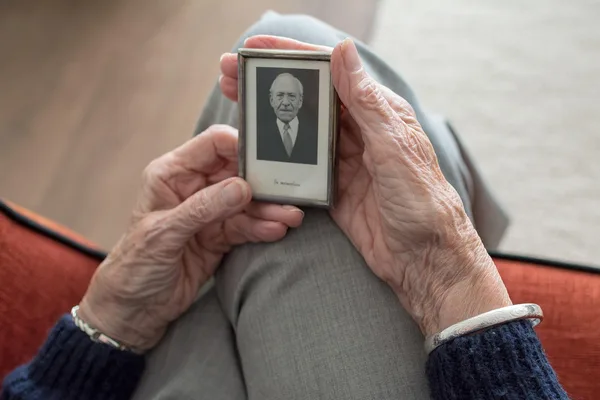
Your father died early Sunday morning, peacefully, in hospice. By Sunday afternoon, the hospice nurse is asking which funeral home to call. You and your brother realize you never asked Dad whether he wanted burial or cremation, a service at his church, or something small. There's a lot to decide, and you're exhausted.
Whether you're planning ahead or facing these choices now, this checklist can help.
Why plan ahead
Planning a funeral in advance takes pressure off a grieving family. It lets your parent make their own choices, gives time to compare options, and reduces the chance of overspending in an emotional moment. Planning ahead doesn't have to mean paying ahead. Simply writing down wishes and sharing them with family is a big help.
If your parent is open to it, talk about what they'd want: burial or cremation, a religious or secular service, a viewing or not, music and readings, where they'd like to rest, and how they'd like to be remembered. Many people find these conversations easier than expected. See anticipatory grief and end-of-life signs in the elderly.
First steps after a death
If your parent dies at home under hospice care, call the hospice first; they'll confirm the death and help contact the funeral home. If the death is unexpected at home, call 911. In a hospital or nursing home, staff will guide you. You don't have to choose a funeral home in the first hour; take time to call a family member or friend for support.
Then contact the funeral home or cremation provider your parent preferred, or one you choose. Let close family know. Look for any written wishes, a prepaid funeral contract, or veterans discharge papers. For the broader to-do list, including notifying Social Security and handling accounts, see what to do when a parent dies.
Your rights under the Funeral Rule
The federal Funeral Rule, enforced by the FTC, protects consumers dealing with funeral homes, whether arrangements are made at the time of death or in advance1. Under the Rule, a funeral provider must give accurate price information by phone when you ask1. When you ask in person about arrangements or prices, the provider must give you a written General Price List that you can keep1. You must be shown a casket price list before you see the caskets, and an outer burial container price list if the home sells them1.
You have the right to choose only the goods and services you want rather than a package, except for a basic services charge and anything required by law, which must be explained in writing1. After you make arrangements, the funeral home must give you an itemized written statement of what you selected and the total1. Use these lists to compare at least two providers if you can. Calling by phone is a good way to compare quickly.
Burial, cremation or another choice
The biggest decision is usually what happens to the body. Traditional burial involves a casket, a cemetery plot or mausoleum, and often a grave liner or vault, which many cemeteries require. Cremation can be followed by a memorial service, scattering, burial of the urn, or keeping the ashes. Direct cremation and immediate burial skip embalming and viewing and are usually the simplest options; funeral homes must list their prices1.
A funeral home that offers cremation must make an alternative container, such as unfinished wood or cardboard, available instead of a casket1. Some people choose whole-body donation to a medical school, green or natural burial, or other options permitted in their state. Ask about local rules.
Embalming and viewing
Embalming is not required by law in most cases. A funeral home may not tell you embalming is required when it isn't, and it must tell you on the price list that embalming isn't required except in certain cases1. Some states require embalming or refrigeration if burial or cremation is delayed. Many funeral homes require embalming for a public viewing but may offer a brief private family viewing without it. Ask.
Caskets, urns and containers
Caskets are often the single most expensive item. You can buy a casket or urn elsewhere, such as online or from a local retailer, and the funeral home can't refuse to handle it or charge you extra for using it1. Ask to see the full range of caskets, including less elaborate ones that may not be on display. Outer burial containers aren't required by law but may be required by the cemetery; ask the cemetery directly.
If you feel pressure to buy more than you want, remember that a simple choice can be a meaningful one. Honoring a parent isn't measured by how much is spent.
Planning the service
Decide what kind of gathering feels right: a funeral with the body present, a memorial service later, a graveside service, or a celebration of life. Choose a location, such as a place of worship, the funeral home, a park or a family home. Pick someone to lead the service, readers, music, and pallbearers if needed. Write or gather material for an obituary and a eulogy. Choose photos, flowers or a charity for donations, and arrange a reception if you'd like.
Delegate. Siblings, grandchildren and friends often want to help. One person might handle the obituary, another the photos, another the food.
The checklist
Use this checklist to work through decisions: Contact hospice or authorities and the funeral home. Find any written wishes or prepaid contract. Gather documents, including the birth certificate, Social Security number, and military discharge papers if a veteran. Choose burial, cremation or another option. Get General Price Lists and compare. Choose a casket, urn or alternative container. Decide on embalming and viewing. Choose a cemetery and plot, or a plan for ashes. Plan the service, readings, music and officiant. Write the obituary. Order certified copies of the death certificate. Arrange the reception. Notify Social Security, Medicare, pension plans, banks and insurers.
Death certificates
The funeral home usually files the death certificate and can order certified copies. You'll need copies to close accounts, claim life insurance and benefits, transfer property and settle the estate. Many families need several. Order a few more than you think; getting more later can take time. See Social Security survivor benefits for benefits a surviving spouse may claim.
Prepaid funeral plans
Some people prepay for a funeral through a funeral home contract. Before your parent signs, ask what exactly is covered, whether the price is locked in, where the money is held, what happens if the funeral home closes or your parent moves, and whether the contract can be canceled with a refund. State laws on prepaid funerals vary. The Funeral Rule applies to arrangements made in advance as well as at the time of death1.
Prepaid funeral contracts may be relevant to Medicaid planning, since irrevocable funeral trusts often aren't counted as assets. See Medicaid spend-down and talk with an elder law attorney.
Veterans burial benefits
VA offers burial and memorial benefits for eligible veterans, including burial in a VA national cemetery, headstones and markers, burial flags, Presidential Memorial Certificates, and burial allowances that may help with funeral and burial costs2. Spouses and some dependents may also be eligible for burial in a national cemetery2. Ask the funeral home to help request military funeral honors.
Caring for yourself
Planning a funeral while grieving is hard. It's okay to ask for help, take breaks, and keep things simple. Hospice programs offer bereavement support to families for months after a death, even if your parent wasn't in hospice long. Support groups, counselors and faith communities can help too. See caregiver support groups.
Keeping costs under control
Funerals can be one of the largest purchases a family makes, and decisions are often made in a rush. A few steps help. Compare at least two General Price Lists, and ask for the itemized statement before you pay1. Choose only the items you want; a package isn't required1. Consider direct cremation or immediate burial followed by a memorial service at a church or community hall. Limit the viewing to a shorter time. Ask about cash advance items, such as flowers, obituary notices and clergy honoraria, which the funeral home pays to others on your behalf.
Check whether your parent had life insurance, a burial policy, a prepaid plan or benefits through a union, employer or fraternal group. If money is tight, ask the county or state about burial assistance programs, which exist in some areas.
Talking with your parent about wishes
Starting the conversation can feel awkward. Try connecting it to something natural: a friend's funeral, updating a will, or a news story. Ask open questions like, 'Have you thought about what kind of service you'd want?' Write down the answers and keep them with other important papers. Some people include funeral wishes in their advance directive or a letter of instruction. See advance directive vs. living will and living trust vs. will.
An example
When Ana's father died, she called two funeral homes and asked for prices by phone. One offered a package with items her family didn't want, so she asked for the General Price List and chose only what they needed: direct cremation, a simple urn bought online, and a memorial service at his church. Because her father was a veteran, the funeral home helped arrange military honors and a niche in a national cemetery. Her brother wrote the obituary, and her aunt handled the reception. This is an illustration; options vary.