If you're reading this, you may be sitting with a parent who is very ill, or watching them slowly change and wondering what it means. It's natural to want to know what to expect. Not all end-of-life experiences are alike: death can come suddenly, or a person may linger for days, and some older adults stay mentally clear while their body weakens, while others remain physically strong as their thinking declines1. Illnesses like congestive heart failure often follow an up-and-down path before the final weeks.
This guide describes the signs families most often see near the end of life, roughly in the order they tend to appear. Every person is different, and your parent's care team is the best guide for their situation. But knowing the general path can help you prepare, focus on comfort and make the time you have count.
Signs in the months before death
For many older adults with chronic illnesses such as heart failure, lung disease, kidney disease or dementia, the end of life comes gradually. Our guide to end-stage COPD describes one common pattern. Looking back, families often recognize a period of decline that lasted months. Common changes include:
- Losing weight without trying, and eating much less.
- Sleeping more and having less energy for everyday activities. (In a parent who isn't seriously ill, extra sleep usually has another cause; see elderly sleeping a lot.)
- More frequent infections, falls or trips to the hospital.
- Needing more help with bathing, dressing, walking and eating.
- Withdrawing from hobbies, visitors and activities they used to enjoy.
- Treatments that used to help working less well.
These signs don't mean death is close, but together they suggest the illness is advancing. This is a good time to talk with the doctor about what to expect, to revisit your parent's wishes and advance directive2, and to ask whether palliative care or hospice could help. Our guide to hospice vs palliative care explains the difference. Grieving before a death is common; see anticipatory grief. When it's time to plan, see funeral planning checklist.
Signs in the final weeks
As the end of life gets closer, changes usually become more noticeable:
- Sleeping most of the day and night, and being hard to wake.
- Eating and drinking very little, sometimes only sips or ice chips.
- Trouble swallowing pills or food.
- Talking less, or speaking in a weaker voice.
- Confusion about time, place or people, or seeing or talking with people who aren't there.
- Restlessness, picking at sheets, or trying to get out of bed.
- Becoming weaker, so that they can no longer walk or sit up without help.
Some people also have a short burst of energy, clarity or appetite, sometimes asking to see someone or for a favorite food. Families find these moments precious. They don't always mean recovery, so use them to say what matters.
Signs that death may be days or hours away
In the last days and hours, the body begins to shut down. These changes are a normal part of dying and are usually not painful for the person, even if they're hard to watch1. When the time comes, our checklist on what to do when a parent dies covers the first hours and weeks.
- Breathing changes. Breathing may become irregular, with deep breaths followed by shallow breaths or pauses. This pattern is sometimes called Cheyne-Stokes breathing.
- Noisy breathing. Some people very near death have a gurgling sound, sometimes called a death rattle, from fluid in the throat. It usually doesn't upset the dying person. Turning them on their side or raising the head can help, and medicine may help too1.
- Cool, discolored skin. Hands, arms, feet and legs may feel cool, and skin may look blotchy, darker or bluish1.
- Less urine. Urine may become darker and much less, as the body takes in less fluid.
- Unresponsiveness. Your parent may not open their eyes or respond, though many experts believe hearing may continue. Keep talking to them.
When death has happened, breathing and heartbeat stop, the eyes may stay partly open and the jaw may relax. If your parent is in hospice, call the hospice nurse rather than 911; they will guide you through what happens next.
Why eating and drinking stop
This is often the hardest change for families, because feeding someone is such a basic way to care for them. But losing appetite is a common and normal part of dying. The NIA notes that going without food or water is generally not painful near the end, and that eating and drinking can add to a dying person's discomfort1.
Offer small amounts of favorite foods or drinks if your parent wants them, and help with feeding if they want to eat but are too tired. Don't force food. Keep the mouth and lips moist with a damp swab, ice chips if they're alert, and lip balm. Talk with the care team before considering feeding tubes or IV fluids; for many people near death, especially those with advanced dementia, they don't add comfort and can cause problems3.
If your parent isn't seriously ill and has simply been eating less, the picture is different, and the cause is often treatable. Our guide to when an elderly parent isn't eating covers what to check.
End-of-life signs in dementia
For someone with dementia, the final stage often lasts longer and can be harder to recognize. See end-of-life signs in dementia. Signs that a person with dementia may be nearing the end of life include being unable to speak more than a few words, being unable to walk or sit up without help, needing help with all personal care, having trouble swallowing, losing weight, and getting repeated infections such as pneumonia or urinary infections3.
Because people with advanced dementia can't easily say they're in pain, watch for clues such as moaning, grimacing, restlessness or pulling away when touched. Our guide to the stages of dementia care needs describes what the late stage typically looks like.
Home, hospital or care community
Many people say they want to die at home, and with hospice support that's often possible. Others are more comfortable in a nursing home or assisted living community where staff they know can care for them, or in a hospice facility when symptoms are hard to manage4. A move late in life can confuse and tire someone who is very ill, so talk with the care team before transferring your parent to the hospital for a new problem. If a hospital stay does happen, our hospital discharge planning guide explains how to plan the next step, including a return home with hospice.
How to keep your parent comfortable
People who are dying need care in four areas: physical comfort, mental and emotional needs, spiritual needs and practical tasks1. Small things make a real difference:
- Tell the care team about any sign of pain, such as restlessness, grimacing or trouble sleeping. Pain is easier to prevent than to relieve, and medicines can be adjusted1.
- For breathlessness, raise the head of the bed, open a window or use a fan for gentle air movement.
- Keep skin clean and moisturized, and change position every few hours if your parent can't move.
- Watch for signs of being too hot or cold, such as pushing off blankets or shivering.
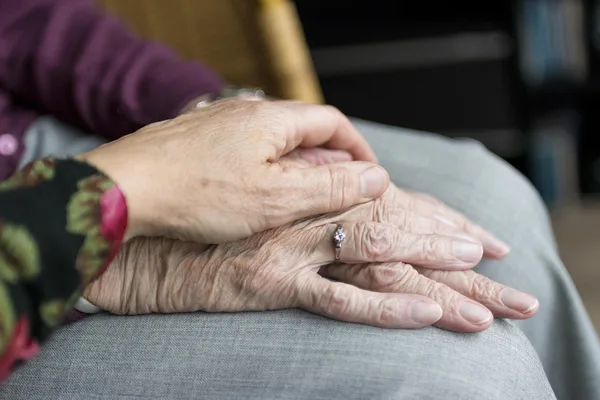
- Hold their hand, play soft music they love, keep the lights low and read or talk to them.
- Invite a chaplain or faith leader if your parent would want one.
Let your parent set the pace with visitors. Some people want family close; others prefer quiet. It's also common for someone to die in the moment a loved one steps out of the room. If that happens, it isn't a failure on your part.
When to call hospice
Many families say they wish they had called hospice sooner. Medicare's hospice benefit is for people with a terminal illness whose doctor certifies that they're expected to live six months or less if the illness runs its usual course, and who choose comfort care instead of treatment to cure the illness5. Hospice can be provided at home, in a nursing home or assisted living community, or in a hospice facility4.
Hospice brings a team: a nurse who manages symptoms, aides who help with bathing, a social worker, a chaplain, volunteers and on-call help around the clock. It also covers medicines and equipment related to the terminal illness, and offers bereavement support for the family afterward5. If your parent improves, they can leave hospice and return later if needed.
Practical steps for the family
- Find the paperwork. Advance directive, health care power of attorney, any do-not-resuscitate order or POLST form, and the will. Our guide to power of attorney for an elderly parent explains the health care agent's role, and our guide to advance directives vs living wills explains DNR and POLST forms.
- Talk about wishes. Where your parent wants to be, who they want nearby, and any spiritual or cultural practices that matter.
- Tell the people who need to know. Family, close friends and anyone your parent would want to see.
- Plan the moment after. Know who to call when death happens: the hospice nurse, or the doctor if hospice isn't involved.
- Choose a funeral home if you can. Making this call ahead of time is one less decision later.
You don't have to do all of this at once, and you don't have to do it alone. MedlinePlus has a collection of trusted resources on end-of-life issues8.
Taking care of yourself
Watching a parent die is exhausting and painful, even when you're prepared. Accept help with meals, errands and sitting with your parent so you can sleep. Take short breaks outside the room. Talk with the hospice social worker or chaplain about your own feelings; their support is for you too. Grief may start before your parent dies, and that's normal. If you've been caring for your parent for a long time, our guide on caregiver burnout has ideas for getting through this time.