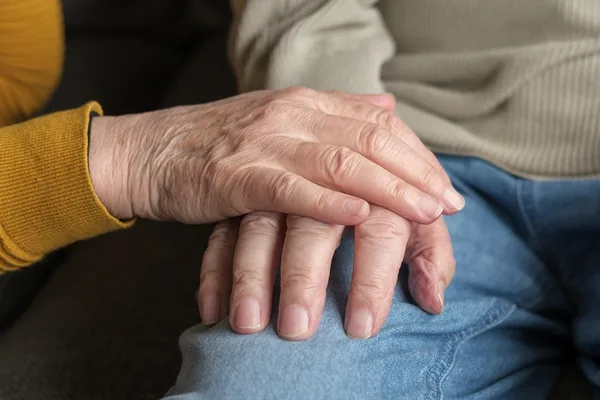
For years, your father's dementia changed slowly. Now he barely speaks, spends most of the day in bed and coughs when he tries to drink. The nurse says he is "declining," and you want to know what that means and what lies ahead.
Recognizing the end of life in someone with dementia is hard. The illness can last many years, and the final stage can stretch over months. Knowing the signs helps you plan, make decisions that fit your parent's wishes and focus on comfort. This guide explains the signs of end of life in elderly people with dementia. For signs in older adults with other illnesses, see end-of-life signs in older adults.
Signs of the final stage of dementia
In the late or severe stage, a person with dementia needs help with nearly everything. Signs that your parent has reached this stage include145:
- Very little speech. Your parent may say only a few words, or none, and may not seem to recognize close family.
- Loss of mobility. They can no longer walk, then may be unable to sit up or hold up their head without help.
- Eating and swallowing problems. Coughing or choking with food or drink, holding food in the mouth, or refusing to eat.
- Full dependence for care. Help is needed with bathing, dressing, eating and using the toilet, and incontinence is common.
- Weight loss. Even with careful feeding, weight often falls.
- Frequent infections. Pneumonia, urinary tract infections and skin breakdown become more common1.
- Sleeping most of the day. Your parent is awake for shorter periods and less responsive.
Our guide to the stages of dementia explains how care needs change across the whole illness. For the decision about tube feeding, see feeding tubes for the elderly.
Signs the end may be months away
No one can predict timing exactly, but some patterns suggest the final months. Doctors and hospices look for very advanced dementia together with a serious complication in the past year, such as aspiration pneumonia, a serious kidney infection, sepsis, pressure sores that won't heal, repeated fevers or significant weight loss from trouble eating6.
Repeated trips to the hospital are another sign. Each stay often leaves a person with dementia weaker and more confused, and recovery may never be complete. If you see these patterns, ask the doctor whether hospice is appropriate. See hospice for dementia.
Signs in the last weeks and days
In the final weeks and days, the body begins to shut down. These signs are much like those in people dying of other illnesses2:
- Little or no eating and drinking. Appetite and thirst fade. Going without food and water is generally not painful at this stage2.
- More sleep. Your parent may be very hard to wake, or unresponsive.
- Breathing changes. Breathing may become irregular, with pauses, or noisy from fluid in the throat.
- Cool hands and feet. Skin may look blotchy, pale or bluish as circulation slows.
- Less urine. Urine becomes darker and less frequent.
- Restlessness. Some people become agitated or pick at their sheets.
- Withdrawal. Your parent may turn inward, reaching for no one and responding little.
These changes can be hard to watch. The hospice team can explain what is happening and adjust care to keep your parent comfortable.
Recognizing pain and distress
People with advanced dementia often can't say that they hurt. Watch for signs such as grimacing, frowning, moaning, crying out, restlessness, rubbing a body part, resisting care or changes in breathing1. Changes in behavior, such as new agitation, may be the only clue to pain, an infection or constipation.
Tell the nurse or doctor when you notice these signs. Pain can usually be eased with medicine and gentle care, such as repositioning, a warm compress or a quiet room. Agitation that seems new or worse deserves a medical check rather than simply more sedation. See anger and aggression in dementia.
How to bring comfort
Even at the end, people with dementia respond to touch, voices and familiar things. Ways to bring comfort include12:
- Physical comfort. Change position every couple of hours, use soft pillows, keep skin clean and dry and moisten lips and mouth.
- Gentle touch. Hold a hand, stroke an arm or brush hair.
- Familiar sounds. Play favorite music, read aloud or simply talk in a calm voice.
- A calm space. Soft light, a comfortable temperature and fewer visitors at once.
- Careful feeding. Offer small tastes of favorite foods only when your parent seems interested; never force food or drink2.
Hearing may remain even when your parent no longer responds, so keep talking to them. Tell them you are there, share memories and say what you need to say.
Decisions families may face
As the end approaches, families are often asked about hospital transfers, antibiotics, feeding tubes and resuscitation. For people with advanced dementia, feeding tubes don't generally extend life or prevent pneumonia, and careful hand feeding is often recommended instead1. Hospital stays can be frightening and disorienting, and many families choose to treat problems where their parent lives when possible.
Use your parent's advance directive and past wishes as your guide. If you hold health care power of attorney, your role is to choose what your parent would have wanted. Ask the doctor about a portable medical order so your parent's wishes travel with them. See advance directives vs. living wills and power of attorney.
When to call hospice
Hospice provides comfort care, medicines for symptoms, equipment, nursing and aide visits, and emotional and spiritual support for the whole family3. Medicare covers it when a doctor certifies a life expectancy of six months or less if the illness runs its normal course3. Hospice can come to your parent's home, a nursing home, or an assisted living or memory care community.
Many families wish they had called sooner. If your parent shows final-stage signs, ask the doctor or call a hospice for an evaluation. See what hospice provides and hospice in assisted living.
Changes that may not mean the end
Not every sudden change means death is near. A urinary tract infection, dehydration, constipation, a new medicine or pain can cause sudden confusion, sleepiness or agitation, and these are often treatable5. Delirium, a sudden change in attention and thinking, is common in older adults with dementia and can look like a sharp decline. Call the doctor when your parent changes quickly. Treating the cause may bring them back toward their usual self. See UTIs in older adults, dehydration and sundowning.
The pattern matters. A steady decline over months, with weight loss, more sleep and repeated infections, points toward the final stage. A sudden change over a day or two may be something else.
Where care happens at the end
Many people with dementia spend their final months in a memory care community or nursing home, and others are cared for at home by family with hospice support. Moving someone with advanced dementia near the end of life can be very upsetting, so if your parent is settled and the staff can meet their needs with hospice, staying put is often kindest. See memory care vs. nursing home.
At home, family usually provides most daily care. Ask hospice about aide visits, respite stays and continuous care during a crisis. If caring at home is no longer possible, a short inpatient hospice stay or a move to a facility may help. Our guide to respite care explains short breaks.
When death happens
If your parent is on hospice, call the hospice, not 911, when you believe your parent has died. A hospice nurse will come to confirm the death, help with the next steps and contact the funeral home you choose. There is no rush. Many families take time to sit with their parent, say goodbye and call other relatives before anyone arrives. If your parent is in a facility, staff will guide you through its process.
In the weeks after, you will need copies of the death certificate to handle accounts and benefits. Hospices offer grief support to the family for many months after a death.
Keeping family informed
When the end seems near, let close family and friends know so they can visit or call if they wish. Some may want to say goodbye in person, while others prefer to remember your parent as they were. Both choices are fine. Grandchildren can often visit if they are prepared for what they will see, such as a hospital bed, oxygen or a parent who doesn't respond. Keep visits short and calm, and give people simple ways to help, such as bringing meals, sitting with your parent for an hour or handling phone calls. Choose one person to share updates so the main caregiver isn't answering every question. If family members disagree about care, ask the hospice social worker or chaplain to help lead a conversation focused on what your parent would want.
Caring for yourself
Dementia often brings grief long before death, as you lose parts of your parent bit by bit. When the end comes, you may feel sorrow and relief at the same time. Both are normal. Lean on family, friends, faith communities and the hospice team, which offers grief support after a death. The Alzheimer's Association's 24/7 Helpline is available any time7. See caregiver burnout.