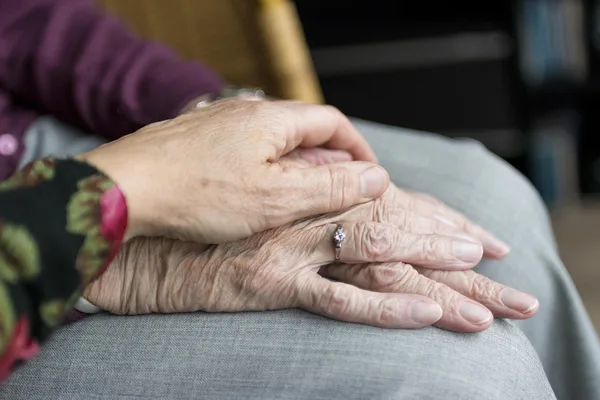
Your mother has advanced Alzheimer's. She's been coughing during meals, eating less, and losing weight. After a hospital stay for pneumonia, the doctor asks whether you'd like a feeding tube placed. You don't want her to starve, but you're not sure a tube will help.
Families face this decision every day, often under time pressure in a hospital. This guide lays out what feeding tubes can and can't do, so you can decide based on your parent's goals.
What a feeding tube is
A feeding tube delivers liquid nutrition, fluids and medicines directly into the stomach or intestine when a person can't eat or drink enough by mouth. Nutritional support can also be given through a vein, though that's less common for long-term use4.
There are two main types. A nasogastric tube goes through the nose into the stomach and is used short term. A gastrostomy tube, often called a G-tube or PEG tube, is placed through the belly wall into the stomach in a minor procedure and can be used for months or years.
When a feeding tube can help
Feeding tubes can help in certain situations, such as a short-term swallowing problem after a stroke or surgery, or when something like a head or neck cancer blocks the food pipe1. In these cases, a tube can provide nutrition while the person recovers or receives treatment, and some people go back to eating by mouth. People with some conditions, like ALS, may choose a tube to extend life while they still have good quality of life.
After a stroke, swallowing often improves over weeks to months with therapy. A temporary tube can bridge that gap. See stroke recovery in the elderly and dysphagia in the elderly.
Feeding tubes in advanced dementia
The American Geriatrics Society recommends against feeding tubes for older adults with advanced dementia2. Careful hand feeding should be offered instead, because it's at least as good as tube feeding for survival, aspiration pneumonia, functional status and comfort2. Feeding tubes have not been shown to improve survival, reduce pneumonia or other infections, or prevent pressure sores in people with advanced dementia1.
Tube feeding in advanced dementia is linked to agitation, more use of physical and chemical restraints, hospital visits for tube problems, and new pressure ulcers2. Trouble eating, weight loss and pneumonia are often part of the natural course of late-stage dementia. See end-of-life signs in dementia.
Why tubes don't prevent pneumonia
Many families hope a tube will prevent pneumonia. But the most common causes of aspiration pneumonia are contaminated secretions from the mouth and sinuses and material regurgitated from the stomach, and a tube can't protect the lungs from those3. In fact, many studies show tube feeding is itself a risk factor for aspiration pneumonia3. Good mouth care may do more to lower risk; see dental care for seniors and pneumonia in the elderly.
Risks and burdens of tube feeding
Feeding tubes carry risks, including pneumonia from food entering the lungs, fluid imbalances, diarrhea and skin infections1. Tubes can leak, clog or come out, often leading to emergency room trips. Some people pull at the tube, which can lead to restraints or sedation3. Rarely, tubes cause serious illness or death3.
A tube also changes daily life. Meals are a source of pleasure and connection, and tube feeding can take that away. For someone who is bedbound, extra fluid and nutrition can also mean more urine and stool, making it harder to keep them clean and comfortable3.
Careful hand feeding
Careful hand feeding means a caregiver helps the person eat small bites of food they enjoy, slowly, while sitting upright, as long as it's comfortable. It's time-consuming, but it keeps the pleasure of taste and the closeness of being cared for3. The goal shifts from calorie counts to comfort and connection at each meal.
Tips: offer small amounts of favorite foods, try soft or thickened textures recommended by a speech therapist, sit upright and stay upright for 30 minutes after, give time between bites, and stop if your parent coughs, turns away or seems tired. Mouth care before and after meals helps comfort and may lower infection risk. See when an elderly parent isn't eating.
Making the decision
Tube feeding is a medical treatment that your parent, or their decision-maker, can accept or decline according to advance directives, previously stated wishes, or what your parent would want2. Hospitals and nursing homes should honor those preferences and shouldn't pressure families to choose a tube2.
Start with your parent's goals. What matters most to them: living as long as possible, being comfortable, being at home, enjoying food? Did they ever say what they'd want if they couldn't eat? Check their advance directive; see advance directive vs. living will.
Questions to ask the doctor
Why is my parent having trouble eating? Is it likely to improve? What do you expect a tube to change for them: comfort, length of life, pneumonia risk? What are the risks? What happens if we choose not to place a tube? Could a time-limited trial make sense? Can a speech therapist assess swallowing and suggest safer foods? Can a palliative care team help us decide?
Time-limited trials
Sometimes families agree to a tube for a set time, such as a few weeks after a stroke, with a plan to reassess. If the person isn't improving or the tube is causing distress, the tube can be stopped. Stopping a treatment that isn't helping is ethically and legally the same as not starting it. Agree on the goals and timing in advance with the medical team, write them down, and choose a date to sit down together and review how things are going.
Palliative care and hospice
A palliative care team can help families weigh these choices and focus on comfort. If your parent is near the end of life, hospice can support comfort feeding and manage symptoms like dry mouth. A person who stops eating at the end of life usually doesn't feel hunger the way we imagine, and mouth care eases thirst. See hospice vs. palliative care and what hospice provides.
Caring for a feeding tube at home
If your parent has a tube, the care team will teach you how to give feedings and medicines, flush the tube, and clean the skin around it. Keep the head raised during feedings and for a while after. Call the nurse or doctor if the tube is blocked or comes out, if there's redness, swelling, pus or bleeding at the site, or if your parent has fever, vomiting, belly swelling or trouble breathing. Home health nurses may help at first; see does Medicare pay for home health care.
In nursing homes
Families sometimes feel pressure from facilities to place a tube because hand feeding takes more staff time. Nursing homes should not impose tube feeding or pressure families2. Ask how the facility supports hand feeding and comfort feeding, and make sure your parent's wishes are in the care plan; see care plan meetings.
Guilt and grief
Feeding someone is one of the most basic ways we show love, so declining a tube can feel like giving up. It isn't. Choosing comfort feeding is a way to honor your parent's wishes and protect them from burdens that don't help. These feelings are part of anticipatory grief; see anticipatory grief.
Other conditions and feeding tubes
Not every older adult with eating problems has dementia. People with Parkinson's disease, head and neck cancer, a recent stroke, or a serious illness that's expected to improve may benefit more from a tube. In those cases, the key questions are whether the underlying problem is likely to get better and whether the tube supports goals your parent cares about, such as getting strong enough for therapy or living to see an important family event. See Parkinson's care for the elderly.
Before any decision, ask for a swallowing evaluation by a speech-language pathologist. Sometimes changes in food texture, posture, pacing or medicines make eating by mouth safer and a tube unnecessary.
When family members disagree
Siblings often see this decision differently. One may feel strongly that a tube is the loving choice; another may feel it would only prolong suffering. Try to focus the conversation on what your parent would want, not what each of you wants. Bring everyone to a meeting with the doctor or palliative care team, who can explain the facts and answer questions. Share any written wishes or remembered conversations. If one person holds legal authority to decide, they should still listen to others, but the final choice rests with them; see power of attorney. A hospital chaplain, social worker or ethics consultant can also help families find common ground.
An example
When doctors raised a feeding tube for Rob's father, who had late-stage Alzheimer's, Rob asked what it would change. The geriatrician explained it wouldn't prevent pneumonia or help him live longer, and might lead to restraints. Rob remembered his father saying he never wanted to be 'kept alive on machines.' The family chose comfort feeding with hospice support. Aides fed him small spoonfuls of ice cream and pudding, and he stayed comfortable at home. This is an illustration; every family's decision is personal.