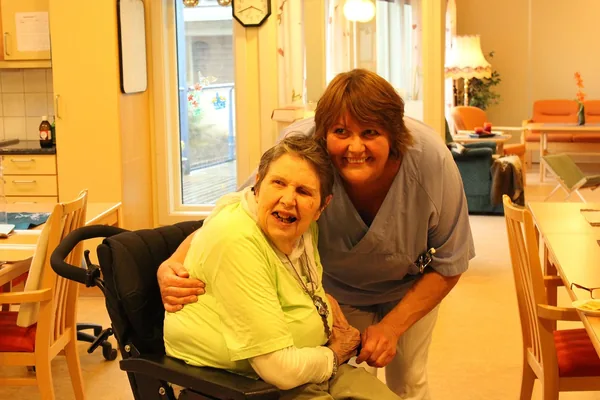
A person with dementia is still the same person: a former teacher, gardener, mechanic or nurse, with likes, dislikes and a lifetime of stories. Person-centered care builds every part of daily care around who that person is.
The Alzheimer's Association's dementia care practice recommendations put person-centered care at the core of quality dementia care1. This guide explains what that looks like. For an overview of memory care, see our memory care guide.
What person-centered care means
Person-centered care treats the person with dementia as a full individual. Instead of fitting the person into a fixed schedule, care adapts to them. It's built on:
- Knowing the person. Life history, culture, faith, work, family, routines and preferences.
- Respect and dignity. Speaking to the person as an adult and protecting privacy.
- Choice. Offering choices, even small ones, like what to wear or eat.
- Relationships. Consistent caregivers who build trust.
- Meaningful activity. Activities that connect to the person's interests and abilities.
How it differs from task-focused care
| Situation | Task-focused | Person-centered |
|---|---|---|
| Morning routine | Everyone is woken at the same time | Residents wake when they usually would |
| Bathing | Scheduled showers, regardless of mood | Bath or shower when the person is calm, in the way they prefer |
| Meals | Set menu at set times | Choices, familiar foods and flexible times |
| Agitation | Seen as a problem to control | Seen as a sign of a need to understand |
| Activities | Group activities for everyone | Activities matched to interests and abilities |
Understanding behavior as communication
As dementia progresses, people may lose the words to say what's wrong. Restlessness, shouting or refusing care often signal pain, hunger, fear, boredom, a noisy room or the need for a bathroom. Looking for the cause and responding calmly works better than arguing or correcting2.
What it looks like day to day
- Staff know residents' names, life stories and preferences.
- Residents' rooms are filled with their own photos and belongings.
- Routines are flexible.
- Staff offer simple choices and wait for answers.
- Activities match past interests, like gardening, music or cooking3.
- Families are partners in care.
Learn more in memory care activities and therapies.
Person-centered care at home
Family caregivers can use the same approach. Keep routines familiar, break tasks into simple steps, offer choices, and focus on what your parent can still do. Activities that draw on your parent's past, like sorting tools, folding laundry or listening to favorite music, can bring comfort and purpose4.
The role of trained staff
Person-centered care depends on staff who are trained in dementia care and have time to get to know residents. Consistent assignments, so the same caregivers work with the same residents, help build trust. See memory care staff training requirements.
Common myths
- "It's only possible with lots of staff." Good staffing helps, but much of person-centered care is about how staff spend their time, not just how many there are.
- "People with late-stage dementia can't make choices." Even late in the disease, people can often show preferences through expressions, gestures and reactions.
- "Routines must be the same for everyone." Routines matter, but they can be built around each person's habits.
- "It's a nice extra." It's at the core of recommended dementia care practice1.
Person-centered care also means using medicines carefully. Non-drug approaches are usually tried first for behavior changes2.
Person-centered care late in the disease
As dementia advances, person-centered care focuses on comfort and connection: gentle touch, familiar music, favorite scents, a calm room and the voices of people the person loves. Knowing someone's wishes about end-of-life care, ideally discussed early, helps families and staff honor them5. Read about stages of dementia and care needs.
How to spot it on a tour
- Ask how staff learn about each resident's history and preferences.
- Ask whether residents choose when to wake, eat and bathe.
- Watch how staff talk with residents: at eye level, calmly and by name?
- Ask how staff respond when a resident becomes upset.
- Ask how families help shape the care plan.
- Notice whether residents are engaged or left idle.
Bring our memory care tour checklist.