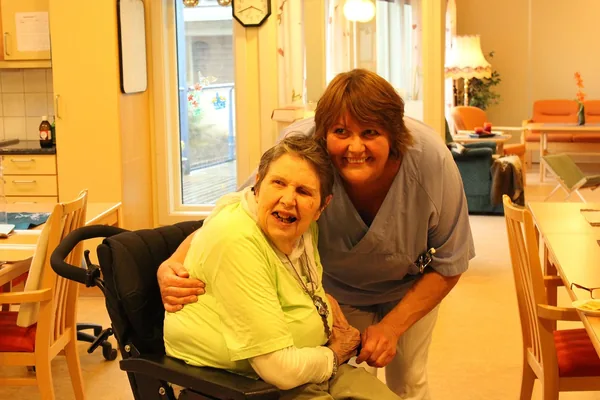
People with dementia may struggle to communicate, become anxious or confused, or react strongly to things that seem small. Staff who understand dementia can recognize what a resident needs, prevent distress and respond with patience. Staff without that training may not.
This guide covers training rules and what to ask. For an overview of memory care, see our memory care guide.
Who sets training rules
Training requirements depend on the type of setting:
- Nursing homes. Federal rules apply to nursing homes that take Medicare or Medicaid. Nurse aides must get at least 12 hours of in-service training a year, including dementia management training and resident abuse prevention training1.
- Assisted living and memory care. States regulate assisted living, including memory care units. Many states set dementia-specific training rules for settings that serve people with dementia, but requirements differ widely in hours, topics and who must be trained2.
You can find state rules through your state's licensing agency. See how to check licenses and inspections.
What good dementia training covers
| Topic | Why it matters |
|---|---|
| How dementia affects the brain | Helps staff understand behavior as a symptom, not a choice |
| Communication | Simple words, calm tone and reading body language |
| Person-centered care | Knowing each resident's history, preferences and routines |
| Behavior changes | Finding causes of distress, like pain or noise, and responding calmly |
| Daily care | Helping with bathing, dressing and eating with dignity |
| Activities | Engaging residents in meaningful ways |
| Safety | Wandering, falls and emergencies |
| Abuse prevention and residents' rights | Protecting residents from harm |
The Alzheimer's Association's dementia care practice recommendations emphasize person-centered care and well-trained staff3. Learn more in person-centered dementia care.
Why training matters for behavior changes
Agitation, aggression, wandering and sleep problems are common in dementia. They're often a sign of an unmet need, like pain, hunger, fear or overstimulation. Trained staff look for the cause and try calm, non-drug approaches first4. Untrained staff may react in ways that make things worse.
Signs of well-trained staff
- Staff speak calmly and at eye level, using residents' names.
- Staff know residents' histories and preferences.
- Residents are engaged in activities, not left in front of a TV.
- Staff redirect gently instead of arguing or correcting.
- The unit feels calm.
- The same staff work with the same residents most days.
Ongoing training and turnover
Training at hiring isn't enough. Ask how often training is refreshed and how new staff are mentored. High staff turnover means residents see unfamiliar faces, which can be upsetting for people with dementia. Ask how long staff typically stay and how the community supports them.
Training and staffing levels go together
Even well-trained staff can't give good care if there are too few of them. People with dementia often need extra time for meals, bathing and dressing, and close supervision throughout the day and night. Staffing rules for assisted living and memory care are set by states and differ2, so it's worth asking each community directly.
- Ask how many residents each aide cares for on day, evening and night shifts.
- Ask whether a nurse is on site, and when.
- Visit at different times, including a weekend or evening, to see staffing for yourself.
How families can help staff
You know your parent best. Sharing that knowledge helps staff give person-centered care from the start:
- Write a one-page life story: work, family, hobbies, favorite music and foods.
- Share daily routines, like when your parent likes to wake, bathe and eat.
- Tell staff what calms your parent, and what upsets them.
- Share words or names your parent uses for important people and things.
- Keep staff updated after visits, doctor appointments or changes you notice.
Building a good relationship with staff makes it easier to raise concerns when they come up5.
Questions to ask
- What dementia training do new staff get before working with residents?
- How many hours of ongoing training do staff get each year?
- Who teaches the training, and what does it cover?
- Are all staff trained, including dining, housekeeping and activity staff?
- How do you handle residents who become upset or aggressive?
- How long has the memory care director worked here?
- What is your staff turnover like?
Add these to our memory care tour checklist.