The TV is loud enough to hear from the driveway. Your father nods along at dinner but answers questions nobody asked. Your mother says everyone mumbles these days, and she's stopped calling friends because the phone is "too hard." These are classic signs of hearing loss, and they're easy to brush off as quirks of age.
Age-related hearing loss is one of the most common conditions affecting older adults. About one in three people in the U.S. between 65 and 74 has hearing loss, and nearly half of those older than 75 have difficulty hearing. Because it happens gradually, people often don't realize what they've lost1. This guide explains the signs, causes and effects of hearing loss in later life, the treatments that help, what insurance covers, and how families can support a parent who is reluctant to get help.
Signs of hearing loss in older adults
The National Institute on Aging suggests seeing a doctor if someone2:
- Has trouble understanding people on the phone.
- Finds it hard to follow conversations when two or more people are talking.
- Often asks people to repeat themselves.
- Turns the TV up so loud that others complain.
- Has trouble understanding speech with background noise.
- Thinks other people are mumbling.
- Can't understand children or people with higher-pitched voices.
Families often notice other clues first (some of which can look like anxiety in elderly parents): a parent who withdraws at gatherings, gives answers that don't match the question, misses the doorbell, or seems more irritable or tired after social events. Listening hard all day is exhausting. A language problem is different; see aphasia after stroke. For coverage questions, see does Medicare cover hearing aids.
What causes hearing loss with age
Age-related hearing loss, called presbycusis, usually happens slowly in both ears. Changes in the inner ear are the most common cause, and changes in the middle ear and along the nerve pathways to the brain can also play a part. Long-term noise exposure, some medical conditions and genetics contribute too1.
Not all hearing loss is from aging. Earwax buildup, ear infections, some medicines and other conditions can affect hearing, and some causes are easily treated32. That's one reason a checkup matters.
When hearing loss is an emergency
Why it matters for health and safety
Hearing loss can make it hard to understand a doctor's advice, respond to warnings, and hear phones, doorbells and smoke alarms. It can also make conversations a struggle, which leads many people to pull away from family and friends12. Inner ear problems can also cause dizziness.
- Isolation and mood. Avoiding conversations can lead to loneliness and depression. See our guides to loneliness in the elderly and depression in the elderly.
- Thinking and memory. Researchers are studying links between hearing loss and cognitive decline. Hearing problems can also be mistaken for memory problems, so it's worth checking hearing whenever there are concerns about thinking; see early signs of dementia.
- Safety. Missing alarms, a knock at the door or traffic sounds can be dangerous, especially for someone who lives alone.
- Medical care. Misheard instructions about medicines or follow-up can lead to mistakes. Bring a second person or ask for written notes.
Getting a hearing check
Start with your parent's primary care doctor, who can look for earwax, infection or medicine side effects and refer them to an ear, nose and throat doctor or an audiologist for a full hearing test2. Original Medicare doesn't pay for hearing aids or for exams to fit them, so ask in advance what a hearing test will cost and whether your parent's plan offers hearing benefits4. Bring a list of the situations where hearing is hardest; it helps the specialist recommend the right solution.
Treatment and devices that help
Hearing aids, special training, certain medications and surgery are among the treatments that can help, depending on the cause2.
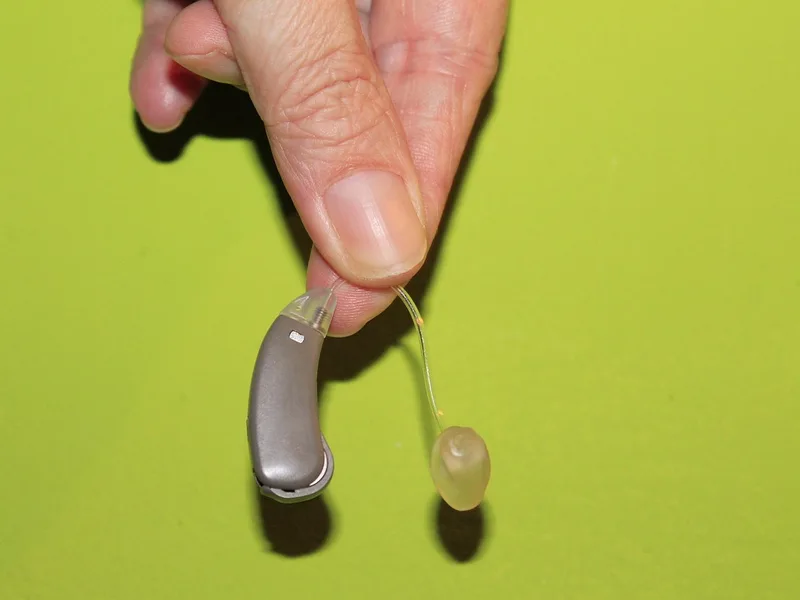
- Hearing aids. Small devices that make sounds louder. They work best when properly fitted and worn every day, and it takes time for the brain to adjust5.
- Over-the-counter hearing aids. Adults 18 and older with perceived mild to moderate hearing loss can buy FDA-regulated OTC hearing aids in stores or online without a prescription. Prescription hearing aids are fitted by a licensed professional and suit all levels of loss6.
- Cochlear implants. For severe hearing loss that hearing aids can't help, an implant may be an option1.
- Assistive devices. TV listening systems, amplified or captioned phones, and alerting devices that flash or vibrate for doorbells and smoke alarms1.
- Captions and apps. TV captions and speech-to-text apps on a phone or tablet make conversations and shows easier to follow.
Original Medicare doesn't pay for hearing aids or exams for fitting them. Some Medicare Advantage plans offer hearing benefits, so check your parent's plan4.
When your parent won't admit to hearing loss
Many people resist the idea of hearing loss. Some don't notice it, and some see hearing aids as a sign of getting old2. A few approaches help:
- Share specifics, gently. "I noticed you missed what the grandkids said at dinner" is easier to hear than "You're going deaf."
- Focus on what they'd gain. Enjoying conversations, hearing grandchildren, following church services or favorite shows again.
- Suggest a simple check. A hearing test at the next doctor visit feels less loaded than buying hearing aids.
- Normalize it. Hearing aids are smaller and more discreet than they used to be, and very common.
- Be patient. It often takes several conversations, and sometimes a trusted doctor's advice, before someone is ready.
If your parent generally pushes back on support, our guide on what to do when an elderly parent refuses help has more ideas.
How to communicate with a parent who has hearing loss
Small changes in how you talk make a big difference1:
- Face your parent in good light, so they can see your face and lips.
- Get their attention before speaking, and cut background noise like the TV.
- Speak clearly and a bit more slowly, without shouting, which can distort words.
- Rephrase rather than repeat the same words if they didn't understand.
- In restaurants, choose a quiet table and seat your parent with their back to the wall.
- Keep your sense of humor and be patient. Frustration on both sides is normal.
Share these tips with grandchildren, friends and anyone who helps your parent regularly, so everyone communicates the same way.
Helping a parent get used to hearing aids
Many hearing aids end up in a drawer. The first weeks are the hardest: everyday sounds like the refrigerator or footsteps can seem jarringly loud, and the brain needs time to adjust5. Encourage your parent to wear them a little longer each day, starting in quiet settings at home before trying restaurants or gatherings. Go back to the audiologist for adjustments rather than giving up, since fit and settings often need fine-tuning.
Practical help matters too. Set up a daily routine for cleaning and charging, keep spare batteries or the charger in the same place, and label the case. Small controls can be hard for stiff or shaky fingers, so ask about models with easier handling or phone-app controls.
Safety at home and on the road
Hearing loss can make everyday risks harder to notice. At home, make sure smoke and carbon monoxide alarms have flashing-light or bed-shaker alerts, add a doorbell that flashes or sends a phone alert, and keep an amplified or captioned phone where your parent spends most of the day1. Our aging in place guide covers other home changes that help a parent stay independent.
Hearing problems often show up alongside vision loss and balance changes, and together they can raise the risk of falls; our fall prevention guide has a home checklist. If your parent still drives, missing sirens, horns or turn signals left on is worth discussing. Our guide on when elderly parents should stop driving explains the signs to watch for.
Making family time easier
Holidays and big family meals can be the hardest settings for someone with hearing loss: many voices at once, clattering dishes and music in the background. A parent may smile and nod through the whole evening and go home feeling left out. A few changes help. Seat your parent in the middle of the table, away from the kitchen and speakers, and turn the music off during the meal. Encourage one conversation at a time, and make a point of sitting with your parent for a quieter one-on-one talk. Video calls with captions turned on can also make it easier to keep in touch with grandchildren who live far away.
Hearing in assisted living and care
If your parent lives in a community or uses home care, make sure staff know about the hearing loss and how your parent communicates best. Label hearing aid cases, keep spare batteries or a charger handy, and ask how staff help residents put hearing aids in and keep them clean. Lost or unused hearing aids are common in care settings. Make sure smoke alarms and doorbells in your parent's room or home have visual or vibrating alerts.