Your father has used the same eye drops every night for years. Lately you've noticed the bottle lasts much longer than it should, and he's bumped into the door frame twice. When you ask, he admits he sometimes forgets the drops, and he doesn't think they do anything anyway.
With glaucoma, those drops are doing important work. Here's what families should know.
What glaucoma is
Glaucoma is a group of eye diseases that can cause vision loss and blindness by damaging the optic nerve at the back of the eye1. The most common type in the United States is open-angle glaucoma; other types, such as angle-closure glaucoma, are less common1. Many people with glaucoma have high eye pressure, and treatments that lower eye pressure help slow the disease, though some people get glaucoma with normal eye pressure1.
There's no cure for glaucoma, but early treatment can often stop the damage and protect vision1. That makes finding it early, and sticking with treatment, especially important for older adults.
Signs and symptoms
At first, glaucoma usually has no symptoms, which is why half of people with glaucoma don't know they have it1. Over time, vision is slowly lost, usually starting with side (peripheral) vision, especially the part closest to the nose1. Because it happens so slowly, many people can't tell their vision is changing until the disease is advanced1.
Families may notice a parent bumping into things on one side, missing steps or curbs, having trouble driving or changing lanes, knocking over cups, or seeming startled when someone approaches from the side. These signs can be mistaken for clumsiness or memory problems. See vision loss in the elderly and fall prevention for the elderly.
When it's an emergency
Angle-closure glaucoma can cause sudden symptoms: intense eye pain, nausea, a red eye and blurry vision1. If your parent has any of these, go to the doctor or an emergency room right away1. Some medicines, including certain cold remedies and drugs that dilate the pupil, can trigger an attack in people with narrow angles, so make sure every doctor and pharmacist knows your parent's eye history. See polypharmacy in the elderly.
Who's at risk
Anyone can get glaucoma, but risk is higher for people over 60, especially Hispanic or Latino adults; African Americans over 40; and people with a family history of glaucoma1. Diabetes also raises risk. Because glaucoma runs in families, encourage siblings and adult children to get checked1.
There's no way to prevent glaucoma, so eye exams are essential to find it before it affects vision1. Talk with your parent's eye doctor about how often to get checked; people at higher risk need a comprehensive dilated eye exam every 1 to 2 years1.
How glaucoma is found
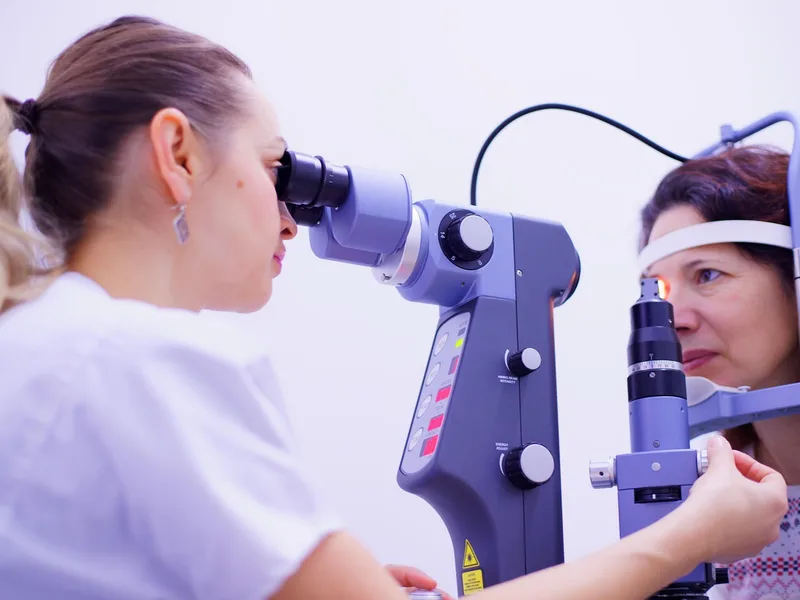
Eye doctors check for glaucoma during a comprehensive dilated eye exam, which is simple and painless: drops widen the pupil, and the doctor examines the eye and tests side vision1. The exam may also include measuring eye pressure and imaging the optic nerve. Because a dilated exam blurs vision for several hours, your parent should bring someone to drive them home.
Medicare Part B covers a glaucoma screening once every 12 months for people at high risk, including people with diabetes, a family history of glaucoma, African Americans 50 and older, and Hispanic adults 65 and older2. After the Part B deductible, your parent pays 20 percent of the Medicare-approved amount, and a copayment may apply in a hospital outpatient setting2. The screening must be done or supervised by an eye doctor legally allowed to do glaucoma tests in your state2.
How glaucoma is treated
Doctors treat glaucoma with medicines (usually eye drops), laser treatment and surgery1. Treatment won't undo vision already lost, but it can stop it from getting worse, so it's important to start right away1. Prescription eye drops are the most common treatment; they lower eye pressure and help prevent optic nerve damage1. Laser treatment, done in the office, helps fluid drain from the eye1. If drops and laser don't work, several types of surgery can help fluid drain1.
Glaucoma treatment is usually lifelong, with regular checkups to see whether pressure is controlled and vision is stable. Ask the eye doctor what the target pressure is and how often your parent needs follow-up.
Helping with eye drops
If the doctor prescribes medicine, your parent needs to take it every day1. Missed doses are one of the most common reasons glaucoma gets worse, and older adults face real barriers: arthritis or tremor makes squeezing bottles hard, poor vision makes aiming hard, memory problems lead to missed or doubled doses, and several drops on different schedules are confusing.
Practical help goes a long way. Tie drops to a daily routine like brushing teeth. Use a chart, phone alarm or pill-organizer reminder. Ask the pharmacy about drop aids that guide the bottle, and about color-coded caps. Have your parent lie down or tilt the head back, pull down the lower lid to make a pocket, and close the eye gently for a minute or two after each drop, pressing lightly at the inner corner. Wait about five minutes between different drops. If your parent can't manage, a family member or home care aide can help, or the doctor may suggest laser treatment to reduce reliance on drops.
Side effects and other medicines
Tell the doctor if treatment causes side effects1. Some glaucoma drops can cause red or irritated eyes, and some are absorbed into the body and can slow the heart rate, worsen breathing problems in people with asthma or COPD, or cause tiredness. Make sure your parent's primary care doctor and cardiologist know about every eye drop. See COPD in the elderly and congestive heart failure.
Don't stop drops because of side effects without calling the eye doctor; other options are usually available.
Living with vision loss from glaucoma
If your parent is having trouble with everyday activities because of vision loss, ask the doctor about vision rehabilitation services or devices that could help1. Low vision specialists can teach ways to scan for objects to the side, recommend lighting and magnifiers, and suggest home changes. Keep pathways clear, add contrasting tape on step edges, and arrange furniture so your parent isn't surprised from the side. Driving may need to be limited or stopped if side vision is reduced; see when should the elderly stop driving.
Loss of independence can bring sadness or anxiety. Support groups and counseling can help; see depression in the elderly.
Glaucoma in senior living
If your parent lives in assisted living or a nursing home, ask how staff handle eye drops: who gives them, at what times, and how missed doses are recorded. Make sure the medication list includes every drop and its schedule, and that someone arranges follow-up eye appointments and transportation. See assisted living medication management.
Eye pressure isn't the whole story
Families often hear 'eye pressure' and assume a normal number means everything is fine. It's more complicated. Some people with high eye pressure never get glaucoma, and one type of glaucoma happens in people with normal eye pressure1. What's normal also varies from person to person1. That's why the eye doctor looks at the optic nerve and side vision over time, not pressure alone, and why skipping follow-up visits is risky even when your parent feels fine.
Glaucoma and cataracts together
Many older adults have both. Cataracts blur vision while glaucoma narrows it, and it can be hard to tell which is causing a change. Some people with glaucoma have cataract surgery combined with a glaucoma procedure that helps fluid drain, which can reduce the number of drops needed. If your parent is considering cataract surgery, ask the surgeon how it will affect glaucoma treatment, which drops to continue around surgery, and whether a combined procedure makes sense. See cataract surgery for elderly parents.
Glaucoma and memory problems
A parent with dementia may forget drops, use the wrong bottle, or refuse drops they don't remember needing. Keep bottles in one place, separate from other eye products. Simplify where you can: ask whether a combination drop or once-daily drop could replace several, or whether laser treatment could reduce the need for drops. Someone may need to give every dose. Eye exams can be harder too, so ask for an early appointment when your parent is most alert. See early signs of dementia.
Questions for the eye doctor
At the next visit, ask: What type of glaucoma does my parent have, and how advanced is it? What is the target eye pressure? Is the vision field stable? How should each drop be used, and what if a dose is missed? Are there side effects to watch for? Would laser treatment or surgery help? How often are checkups needed? Should family members be screened?
An example
When Daniel realized his father was missing drops, he went with him to the eye doctor. The doctor found his eye pressure was up and his side vision had narrowed slightly. They switched to a once-daily drop, Daniel set a phone alarm and bought a drop guide, and the doctor scheduled laser treatment to lower pressure further. At the next visit, pressure was back in range. Daniel also moved a hallway table that his father kept bumping. This is an illustration; treatment varies.