Your mother mentions, almost in passing, that she slipped getting out of the tub last week and caught herself on the towel bar. It held, this time. She's 81, lives alone, and bathes every evening. You realize the bathroom you grew up with was never designed for someone with stiff knees and a little less balance.
A few changes can make a big difference. Here's where to start.
Why the bathroom is risky
Older adults and people with medical problems are at risk of falling, and a fall can mean broken bones or more serious injuries1. The bathroom is the place in the home where falls most often happen1. Floors get wet, tile and porcelain are hard and slippery, spaces are tight, and bathing and toileting require bending, twisting, sitting and standing, often without shoes or glasses. Many trips to the bathroom happen at night, when a person is groggy and the light is dim.
Taking precautions matters most for people with joint pain, muscle weakness or a physical disability1. Medicines that cause dizziness, low blood pressure on standing, urinary urgency, poor vision and memory problems all raise the risk. Falls are common but often preventable, and the CDC's STEADI program encourages providers to screen older adults for fall risk2. For a whole-home view, see fall prevention for the elderly.
Clear the floor and the entry
Start by removing floor coverings and anything that blocks the entry to the bathroom1. Loose bath rugs are a common trip hazard; if your parent wants a mat, choose a non-skid mat outside the tub for firm footing1. Keep the floor outside the tub or shower dry1. Move laundry baskets, scales and wastebaskets out of the walking path, and make sure the door opens easily. If your parent uses a walker, check that it fits through the door and that there's room to turn.
Consider whether the door could block help in an emergency. A door that swings inward can be hard to open if someone falls against it. Some families remove the lock or replace it with one that can be opened from outside.
Grab bars
Grab bars are one of the most useful changes. They should be secured vertically or horizontally to the wall, not diagonally1. Don't use towel racks as grab bars; they can't support a person's weight1. Most people need at least two: one to help get in and out of the tub, and another to help stand up from a sitting position1.
Grab bars must be anchored into wall studs or with proper anchors rated for the load, so this is often a job for a handyman or contractor who has done it before. Suction-cup bars are not a substitute for a secure installation. Many grab bars now look like towel bars or shelves, which helps parents who don't want the bathroom to feel clinical. Put a bar near the toilet too, or use a toilet safety frame. For bigger projects, see home modifications for the elderly.
In the tub or shower
Put non-slip suction mats or rubber silicone decals in the bottom of the tub to prevent slips1. Sitting on a bath chair or bench in the shower lowers the risk of falling1. A tub transfer bench, which sits partly outside the tub, lets your parent sit down first and then swing their legs over the edge rather than stepping over it. A handheld shower head makes washing while seated much easier.
If stepping over the tub wall is becoming hard, a walk-in shower with a low or no threshold is a longer-term fix. Walk-in tubs are another option but are costly and slow to fill and drain, so a seated shower often works better. Keep soap, shampoo and a washcloth within reach so your parent doesn't have to bend or stretch. A long-handled sponge helps with feet and back.
Water temperature and scalds
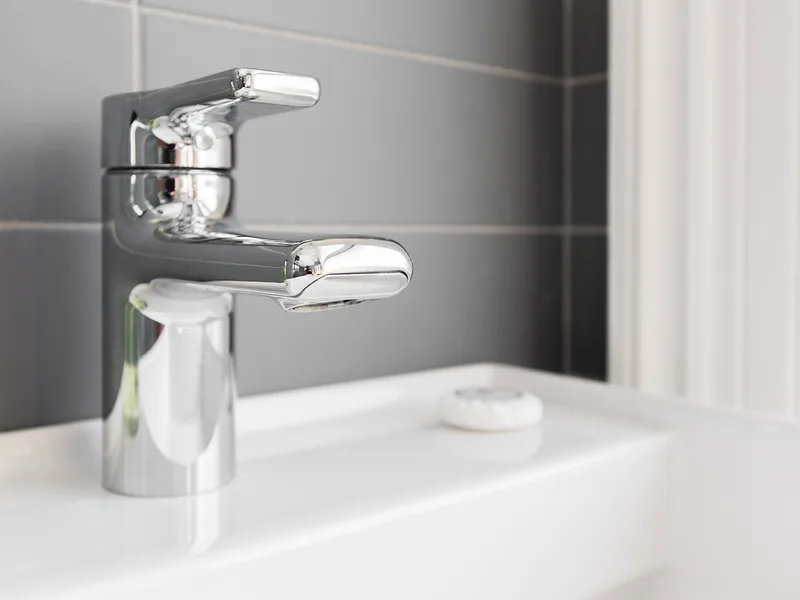
Older skin burns more easily, and slower reaction time makes scalding more likely. Set the water heater to no more than 120°F (49°C) to prevent burns1. A single-lever faucet that mixes hot and cold water together is easier to control than separate handles1. Anti-scald valves can also be installed. If your parent has diabetes or neuropathy and can't feel heat well in the feet or hands, test the water with an elbow or a thermometer before getting in. See diabetes in the elderly.
At the toilet
Getting up and down from a low toilet is hard on stiff knees and hips. Raising the toilet seat height can help prevent falls, either with an elevated toilet seat or by using a commode chair instead1. A grab bar or safety frame gives something steady to push from. Getting up suddenly after urinating can cause dizziness, so encourage your parent to sit and stand slowly1.
A portable bidet seat that sprays warm water and then warm air can help a parent clean themselves without twisting, which some people find preserves privacy and independence1. If nighttime trips are frequent or urgent, a bedside commode may be safer than walking to the bathroom. See incontinence in the elderly for ways to reduce urgency.
Lighting and nighttime
Good lighting prevents a lot of falls. Use bright, even light in the bathroom and plug-in night lights along the path from bed to toilet. Motion-sensor lights turn on automatically so your parent doesn't fumble for a switch. A light switch right at the door, or a lighted switch plate, helps too. Encourage your parent to put on glasses and sturdy slippers with non-slip soles before getting up at night.
Many nighttime falls involve rushing. Getting up slowly, sitting on the edge of the bed for a moment, and keeping a clear path all help. Ask the doctor whether any medicine could be causing frequent nighttime urination or dizziness; see polypharmacy in the elderly.
Equipment and what Medicare covers
Useful equipment includes shower chairs and transfer benches, raised toilet seats and safety frames, handheld shower heads, non-slip mats and grab bars. Medicare Part B covers some durable medical equipment when a doctor prescribes it for use in the home3, such as a bedside commode in some situations. However, many bathroom safety items are considered convenience items and aren't covered by Original Medicare. Some Medicare Advantage plans offer allowances for bathroom safety items, and Medicaid waivers may pay for home modifications for people who qualify. See durable medical equipment and Medicare.
Your area agency on aging may know of local programs that install grab bars for older adults at little or no cost; find it through the Eldercare Locator4.
Get a home safety assessment
If you're not sure what changes your parent's bathroom needs, ask the doctor for an order to see an occupational or physical therapist, who can visit the home and make safety recommendations1. An occupational therapist can watch your parent get in and out of the tub, recommend the right equipment, and teach safer ways to move. After a hospital stay or a fall, home health care may include these visits; see does Medicare pay for home health care.
Ask the doctor about your parent's overall fall risk as well. Strength and balance exercises, a medication review, vision checks and treatment for foot problems all reduce falls7.
Safer bathing habits
Equipment helps most when paired with good habits. Encourage your parent to bathe when someone else is home or nearby, at least at first. Keep a phone within reach, or wear a waterproof medical alert pendant; many falls happen in the bathroom, and an alert device can bring help quickly. See medical alert systems for seniors. Avoid bath oils, which make surfaces slippery. Dry off while seated. Never lock the door if there's a chance of needing help.
If your parent gets tired or short of breath in the shower, a seated shower, shorter showers, or a bath every other day with sponge baths in between may help. Bathing can be one of the first tasks older adults need help with, and a home care aide can provide standby help or full assistance.
Bathroom safety with dementia
People living with dementia may forget how to use equipment, misjudge water temperature, or become frightened in the shower. Keep the routine the same, use calm step-by-step prompts, and keep the room warm. Contrasting colors, such as a colored toilet seat or a dark grab bar against a light wall, help people with depth perception problems. Remove razors, medicines and cleaning products. If bathing becomes a struggle, see dementia and refusing to shower.
When home changes aren't enough
Sometimes even a well-adapted bathroom isn't enough, especially if your parent has repeated falls, needs hands-on help to bathe, or can't get to the toilet safely at night. That's the time to think about more help at home or a move. Assisted living and nursing homes have accessible bathrooms and staff to help with bathing and toileting. See signs it's time for senior living and aging in place.
A quick checklist
Walk through your parent's bathroom and check: Is the floor clear of rugs and clutter? Is there a non-skid mat inside and outside the tub? Are there at least two securely installed grab bars? Is there a shower chair or transfer bench and a handheld shower head? Is the toilet high enough, with something to push from? Is the water heater set at or below 120°F? Is there a night light and an easy-to-reach switch? Can your parent call for help from the bathroom? Can the door be opened from outside?
An example
After her mother's near-fall, Priya asked the doctor for an occupational therapy home visit. The therapist recommended two grab bars, a tub transfer bench, a handheld shower head and a raised toilet seat, and showed her mother how to sit first and swing her legs over the tub edge. A handyman installed the bars into the studs. Priya added motion-sensor night lights and turned down the water heater. Her mother now showers seated and keeps her alert pendant on. This is an illustration; every home is different.