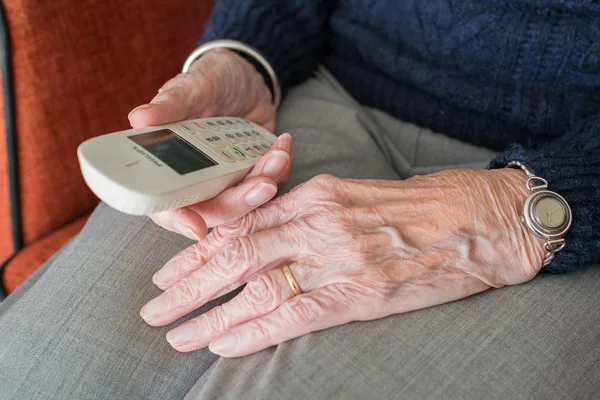
Your sister moved back to town two years ago and now spends most afternoons with your dad: driving him to appointments, cooking, sorting his pills and helping him shower. She cut back her hours at work to do it. Your dad wants to pay her, and everyone agrees it's fair. But someone mentioned that paying a family member could cause trouble if he ever needs Medicaid. What's the right way to do this?
Family members provide most of the long-term care older adults receive5. Paying a relative for that care is legal and often wise. The key is to do it in writing, at a fair rate, going forward, with the taxes handled. That's what a caregiver agreement, also called a personal care agreement or family care contract, is for. This guide explains how it works. It's general information, not legal or tax advice. Rules vary by state, so for large sums or a likely Medicaid application, work with an elder law attorney and a tax professional.
What a caregiver agreement is
A caregiver agreement is a written contract between a person who needs care, usually a parent, and a family member who provides it. It describes the services, the schedule, the pay and how the arrangement can change or end. Both people sign it, ideally before paid care begins.
The agreement protects everyone. Your parent gets clear expectations. The caregiver gets fair pay and recognition. Siblings can see that payments are for real work, not favoritism. And if your parent later applies for Medicaid, the agreement and records help show the payments were for services, not gifts.
Why a written agreement matters for Medicaid
When someone applies for Medicaid long-term care, the state reviews five years of finances. Transfers for less than fair market value during that time can cause a penalty period when Medicaid won't pay for nursing home or waiver care1.
Many states presume that care from family is given out of love, for free, unless there was a written agreement at the time the care was given. Without one, payments to a relative may be counted as gifts. Paying for past care in a lump sum is especially likely to be questioned. A written agreement, fair pay and good records make it much easier to show that each payment matched services received. Read the Medicaid look-back period for how penalties work.
What to include in a caregiver agreement
- The names of the parent and the caregiver, and the date the agreement starts.
- A clear list of services, such as personal care, meals, medicine reminders, transportation, housekeeping, bill paying and arranging appointments.
- The expected schedule or hours per week, and how hours will be tracked.
- The rate of pay, how often payment is made, and how it's paid, ideally by check or transfer, never cash without records.
- That payment is only for care provided going forward, not past care.
- How the agreement can be changed, such as when care needs grow.
- How either side can end it, and what happens if the parent moves to a facility.
- Who will handle taxes and any household employer filings2.
- Signatures, ideally notarized, and copies for each person.
If your parent can't sign because of dementia, an agent under a durable power of attorney may be able to sign if the document allows it. Another family member, not the caregiver, should usually act for the parent to avoid a conflict of interest. See power of attorney for an elderly parent.
An example of how it might work
Here is how one family might set things up. Maria's mother has early dementia and lives alone. Maria agrees to provide about 20 hours of help a week: driving to appointments, grocery shopping, preparing meals, setting up the weekly pill organizer and helping with bathing twice a week. Maria's brother, who holds their mother's power of attorney, calls three local agencies to ask about hourly rates and picks a rate in that range.
The agreement lists the tasks, the expected hours, the hourly rate and that payment is made every two weeks by check from their mother's account, based on Maria's care log. It says the agreement will be reviewed every six months and ends if their mother moves to assisted living. Both sign it in front of a notary, and the brother keeps copies with the financial records.
Setting fair pay
Pay should be reasonable for the work and your area. A good test is what a local home care agency or private caregiver would be paid for similar tasks. Call two or three agencies and ask about rates for companion care and personal care, and note the answers in your records. Pay well above local rates can look like a disguised gift. Pay far below them may not be fair to the caregiver.
Some families set a different rate for hands-on personal care than for errands or household help, or a weekly amount for an estimated number of hours. Whatever you choose, keep it consistent with the agreement. See home care agency vs. private caregiver for how hired care compares.
Keep good records
- Keep a care log. Date, hours and tasks done each day or week. A simple notebook or spreadsheet works.
- Pay by check or bank transfer. With a note in the memo line, such as "care services, week of March 3."
- Match payments to the log. Each payment should line up with the hours recorded.
- Keep the agreement and changes together. Sign and date any updates.
- Save agency rate notes. To show how you set the pay.
These records matter if your parent applies for Medicaid, and they help if siblings have questions later.
When the caregiver lives with your parent
Sometimes the caregiver lives with the parent, or the parent moves in with them. The agreement should then say whether pay covers only care or also room and board, and how shared household costs such as food and utilities are split. Keeping these separate makes records clearer. If the parent is paying rent to live in the caregiver's home, put that in writing too. See when an elderly parent moves in.
If the caregiver lives in the parent's home and has provided care that kept the parent out of a nursing home for at least two years, federal law allows the home to be transferred to that child without a Medicaid penalty1. Good care records support that exemption too.
When care needs change
Care needs rarely stay the same. Plan to review the agreement every six to twelve months, or sooner after a hospital stay or new diagnosis. Update the list of services, the hours and the pay in a signed and dated addendum. If your parent moves to assisted living or a nursing home, the agreement may end or shrink to tasks like visits, managing bills and advocating at care meetings. Write down how that transition will work so no one is surprised. Clear expectations protect both the caregiver relationship and your family relationships during an already stressful change.
Taxes for the caregiver and the parent
Payments under a caregiver agreement are generally taxable income to the caregiver. On the parent's side, a family caregiver who works under the parent's direction may be a household employee. The IRS explains when household employers must withhold and pay Social Security and Medicare taxes, file federal unemployment tax and give the worker a Form W-2, including special rules for some family members26. State rules may add payroll or unemployment requirements.
If your parent pays for care through certain Medicaid waiver programs instead, some payments to caregivers who live with the person they care for may be excludable from the caregiver's income7. A tax professional can sort out which rules apply. Some of your parent's care spending may also count as a medical expense. See memory care tax deductions.
Programs that pay family caregivers
Before your parent pays out of savings, check whether a public program could pay the family caregiver instead. Many state Medicaid programs offer self-directed services that let the person receiving care hire and manage their own workers, sometimes including relatives3. Rules about which relatives can be paid differ by state. VA has its own programs for some veterans' caregivers48.
Read how to get paid to care for an elderly parent and Medicaid waivers for home care for details. If your parent may need Medicaid soon, see how to apply for Medicaid for an elderly parent.
Common mistakes to avoid
- Paying for past care. Lump sums for care already given are often treated as gifts.
- Paying in cash with no records. It's hard to prove what the money was for.
- Setting an unusually high rate. Pay should match local rates for similar work.
- A vague agreement. "Help as needed" is hard to defend. List services and hours.
- Skipping taxes. Unreported income and missed payroll filings can cause problems later2.
- Leaving siblings out. Share the plan openly to avoid resentment.
- Prepaying for years of care. Large up-front payments face extra scrutiny under Medicaid rules.
A caregiver agreement is not a way to move money out of your parent's name quickly. It works best as an honest record of real work. If you're worried about being held responsible for a parent's bills, see filial responsibility laws.
Talking about it as a family
Money between family members can stir up strong feelings. Hold a family meeting, explain why the arrangement makes sense, and share the agreement and the pay rate. Siblings who live far away may help in other ways, such as handling bills or paying for respite. See long-distance caregiving and managing an elderly parent's finances.
Caregivers also need breaks. Paid or not, family caregivers are at risk of exhaustion. Build respite into the plan. See respite care and caregiver burnout.